
Selling 925 sterling silver jewellery in the United States involves more than choosing attractive designs and setting the right prices. Retailers must also ensure that product labels, descriptions, and marketing claims accurately explain what customers are buying.
Customers often look for details such as silver purity, metal composition, and product quality before making a purchase. Unclear or misleading information can create confusion and affect customer trust.
The Federal Trade Commission (FTC) provides guidance for the jewellery industry through its Jewelry Guides, which cover claims about precious metals, gemstones, and other jewellery products.
For jewellery wholesalers and retailers, understanding these guidelines is important for maintaining accurate product information and building reliable customer relationships.
In this guide, we will explore the key U.S. labeling considerations retailers should understand when selling 925 sterling silver jewellery.
1. Understand What 925 Sterling Silver Means
Before creating product labels or online listings, retailers should understand the meaning of 925 sterling silver.
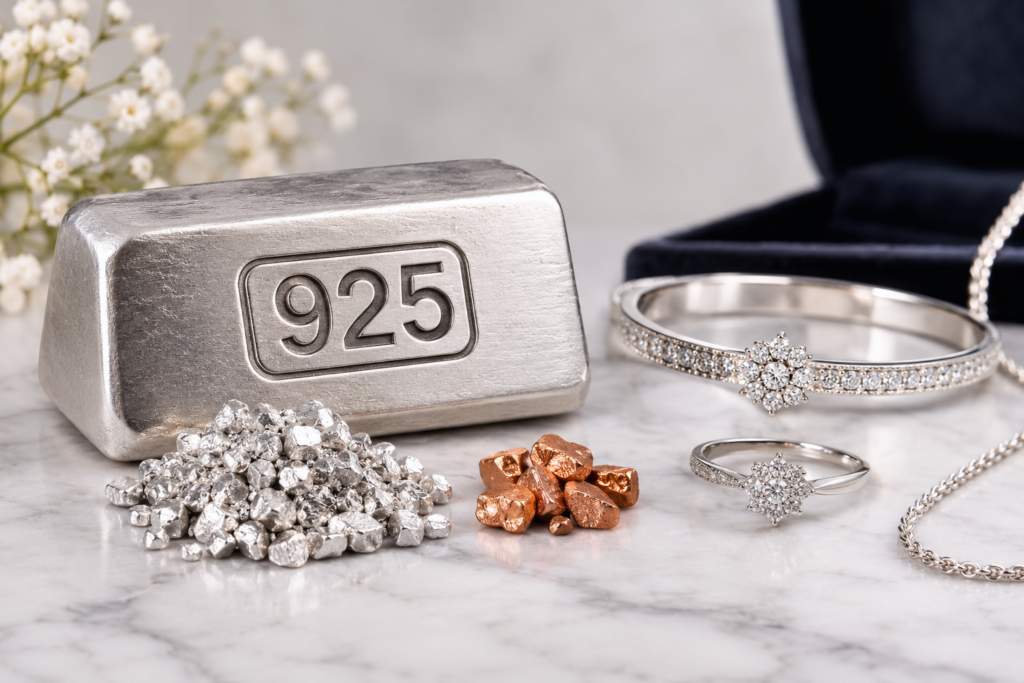
Sterling silver contains:
92.5% pure silver
7.5% other metals, commonly copper
The additional metals improve the strength and durability of silver, making it suitable for jewellery manufacturing.
The term “925” represents 925 parts of pure silver per 1,000 parts of the alloy. It is also commonly identified through terms such as:
925 Sterling Silver
Sterling Silver
925 Silver
.925 Silver
Under the FTC Jewelry Guides, products described as “Sterling Silver,” “Sterling,” or “Ster.” should contain at least 925 parts per thousand pure silver.
Retailers should use these terms only when the product meets the required silver purity standard.
2. Use Accurate Silver Purity Marks and Stamps
A silver purity mark helps customers understand the metal content of a jewellery item.
Common examples include 925, .925, Sterling, and Sterling Silver.
However, retailers should not assume that a stamp alone is enough to establish product authenticity. The actual silver content must match the product description.
The FTC’s consumer guidance also explains that silver items should carry the name or U.S.-registered trademark of the company or person responsible for the mark.
Retailers should understand who is responsible for the quality mark and ensure that the product marking and supporting business information are accurate.
3. Clearly Distinguish Sterling Silver from Silver-Plated Jewellery
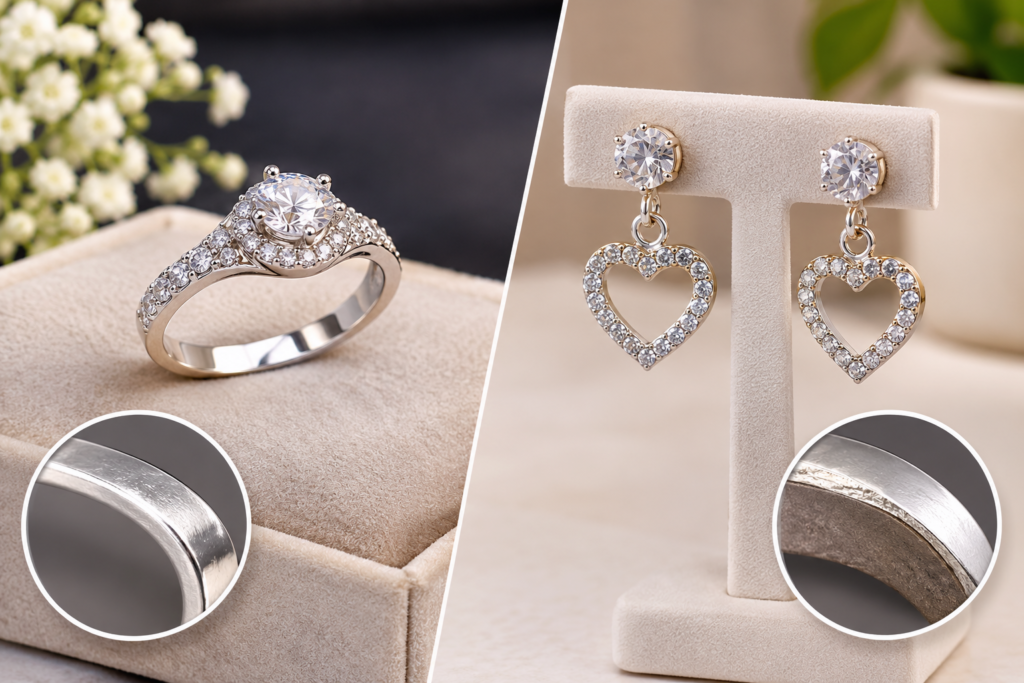
One important labeling consideration is the difference between solid sterling silver and silver-plated jewellery.
Sterling Silver: The jewellery is made from an alloy containing at least 92.5% pure silver.
Silver-Plated Jewellery: A base metal or another material has a surface coating of silver.
Retailers should clearly communicate this difference in product descriptions, labels, and advertisements.
For example:
Accurate: “925 Sterling Silver Ring
Accurate: “Silver-Plated Fashion Earrings
Misleading: Describing a silver-plated item simply as “925 Sterling Silver”
The FTC Jewelry Guides warn against descriptions that make coated products appear to be made throughout of silver. Claims about silver plating must also accurately represent the coating and its durability.
4. Provide Clear Product Descriptions and Plating Details
Online jewellery retailers should pay special attention to product descriptions because customers cannot physically examine an item before purchasing it.
For 925 sterling silver products, useful product information can include:
Metal type: 925 Sterling Silver
Silver purity: 92.5%
Gemstone details, if applicable
Plating or surface finish, if applicable
Product dimensions and weight, where relevant
Many sterling silver designs also include surface finishes such as:
Rhodium-Plated Silver
Gold-Plated Sterling Silver
Rose Gold-Plated Sterling Silver
These finishes should be described clearly. For example, “925 Sterling Silver with Rhodium Plating” helps customers understand both the base metal and the surface treatment.
Retailers should also ensure that product titles, images, and descriptions provide a consistent and accurate understanding of the jewellery.
5. Avoid Misleading Jewellery Quality and Marketing Claims
Retailers should be careful with statements that cannot be supported by reliable product information.
Examples include:
100% Pure Silver
Never Tarnishes
Completely Allergy-Free
Lifetime Shine
Premium Quality Guaranteed
For example, 925 sterling silver is not 100% pure silver. It contains 92.5% pure silver and other metals.
Similarly, sterling silver can tarnish over time depending on environmental conditions. Therefore, claiming that it will never tarnish may create unrealistic expectations.
If a retailer uses claims such as nickel-free, hypoallergenic, or tarnish-resistant, there should be reliable information supporting those claims.
The FTC expects jewellery businesses to represent product quality, metallic content, durability, and other important characteristics truthfully.
6. Maintain Accurate Product Information from Suppliers
Retailers often purchase jewellery from manufacturers, wholesalers, and international suppliers. Before listing products for sale, they should request and maintain relevant product information.
This may include:
Silver purity specifications
Product material details
Quality testing or assay documentation, where available
Information about plating and surface finishes
Details of gemstones and additional components
Supplier invoices and product records
These details help retailers verify product claims and maintain consistency across catalogues, packaging, and online listings.
For wholesalers and manufacturers supplying the U.S. market, providing clear product specifications can also help retail partners prepare accurate product descriptions.
7. Keep Labels Consistent Across Sales Channels
Jewellery information should remain consistent wherever the product is presented to customers.
Retailers may sell through physical stores, websites, online marketplaces, catalogues, and social media platforms. Different descriptions across these channels can confuse customers.
Retailers should review:
Product tags and labels
Packaging and jewellery cards
Website product descriptions
Online marketplace listings
Social media advertisements
Promotional catalogues
For example, a product should not be described as silver-plated on its packaging but advertised as solid sterling silver online.
The FTC Jewelry Guides cover claims made through labeling, advertising, promotional materials, and other marketing channels. Retailers should therefore ensure that all product information is accurate and consistent.
Conclusion
Understanding U.S. jewellery labeling requirements is an important part of selling 925 sterling silver jewellery. Retailers should pay attention to silver purity marks, product descriptions, plating disclosures, quality claims, and supplier information.
Clear and accurate product labeling helps customers understand what they are purchasing while supporting transparency and trust in the jewellery business.
For wholesalers and manufacturers supplying the U.S. market, providing reliable material specifications and consistent product information can also make business relationships smoother.
At Praavy Jewels, we understand the importance of quality and transparency in the silver jewellery industry. With over 30 years of manufacturing experience, we offer 925 sterling silver jewellery collections for wholesalers and retailers looking for reliable sourcing and a wide range of designs.
Note: This article provides general business information, not legal advice. Retailers should also review applicable state requirements, marketplace policies, and product-specific rules with a qualified compliance professional.
Frequently Asked Questions (FAQs)
1. What does 925 mean on sterling silver jewellery?
The 925 mark indicates that the jewellery contains 92.5% pure silver and 7.5% other metals, commonly copper. It is the standard purity associated with sterling silver.
2. Can retailers sell silver-plated jewellery as sterling silver?
No. Retailers should not describe silver-plated jewellery as solid sterling silver. The product description should clearly explain that it has a silver coating over another base material.
3. Do U.S. jewellery labeling guidelines apply to online sellers?
Yes. FTC Jewelry Guides cover claims made through product labels, advertising, promotional materials, and other marketing channels. Online product descriptions and advertisements should also provide accurate information.
4. What documents should retailers request from 925 silver jewellery suppliers?
Retailers can request silver purity specifications, testing or assay reports where available, material details, plating information, and supplier records. These documents help support accurate product descriptions and quality claims.